All Souls Day – 2 November (2025)
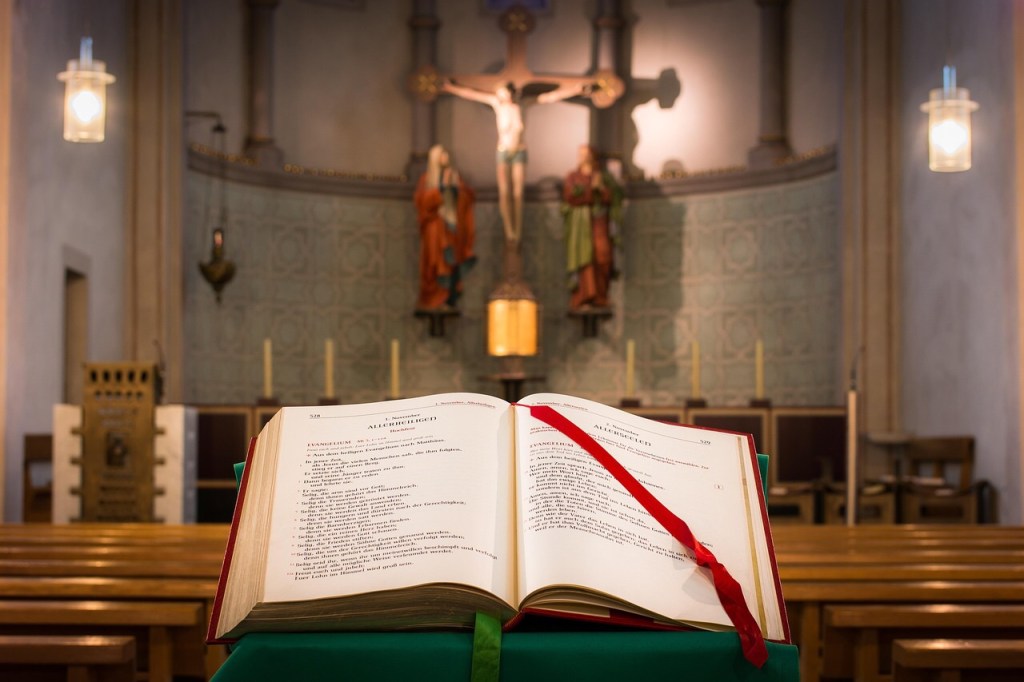
ISAIAH 25: 6-9
ROMANS 5: 5-11
MARK 15: 33-39; 16:1-6


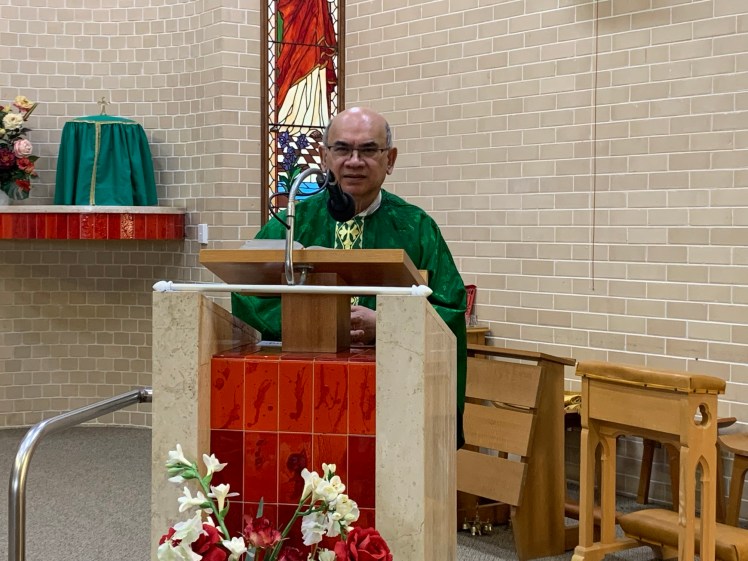
One of the hardest things I have to do as a priest is to be with the family of someone who has just passed away. It is so difficult to find the right words.

But whilst I do not have the words, the most comforting words is that which comes from God: the promise of eternal life which gives hope and comfort. It is a promise that is made real through the death and resurrection of Jesus, His Son. It is when we pray together that I find the family finds most comfort in.

For that reason, it is a very humbling experience for me. There is nothing I can offer but so much that God wants to say to us.

And so being there with the family for me is also a great faith experience. For it reminds me of our dependence on God and how important it is to grow in my faith in God.

Recently, I was visiting mother who was only 46years old who was close to death. She had two teenage children. She said that she had accepted what was and was ready to go to God. Her faith in God shone out in that difficult time. Her faith revealed her trust and belief in God’s love for her, knowing that God was with her especially then and that our earthly death is not the end.

And so, the Christian funeral is always a celebration. It is a strange thing to say, but at the funeral, we are celebrating God’s love for us, by proclaiming Jesus’ Death and Resurrection which gives life. And so as we pray for God’s mercy for the deceased, we commend their soul to a new life with God for all eternity.

And all this is what All Souls Day is about. It celebrates God’s love for us, a love that will never die, a love that has conquered death, a love that gives new life. It celebrates God’s desire that we will be united with His love in heaven forever.

Yesterday in the feast of All Saints we thanked God for those who are united with Him in the eternal kingdom who are praying for us. Today we pray for the souls in purgatory waiting to be united in God’s heavenly banquet. Our prayers for them help their souls to be open to God’s mercy as they long to be united in God’s love.

As God’s family we are all united in prayer for each other.

And so this is a day not only for quiet remembering and praying for those especially our loved ones who have died but also for a strengthening our faith in God’s gift of eternal life. And so, even though All Souls Day seems to be surrounded by the atmosphere of death, it is really about life: your life, my life, the life of the people we remember, the spiritual life that ties us together and eternal life in the Lord.

Today we proclaim our faith: that through Jesus’ Death and Resurrection, we have the promise of eternal life.
30TH SUNDAY ORDINARY TIME – YEAR C (2025) Mission Appeal

ECCLESIASTICUS / SIRACH 35: 12-14, 16-19
PSALM 33: 2-3, 17-19, 23 R. v. 7
2 TIMOTHY 4: 6-8, 16-19
LUKE 18: 9-14


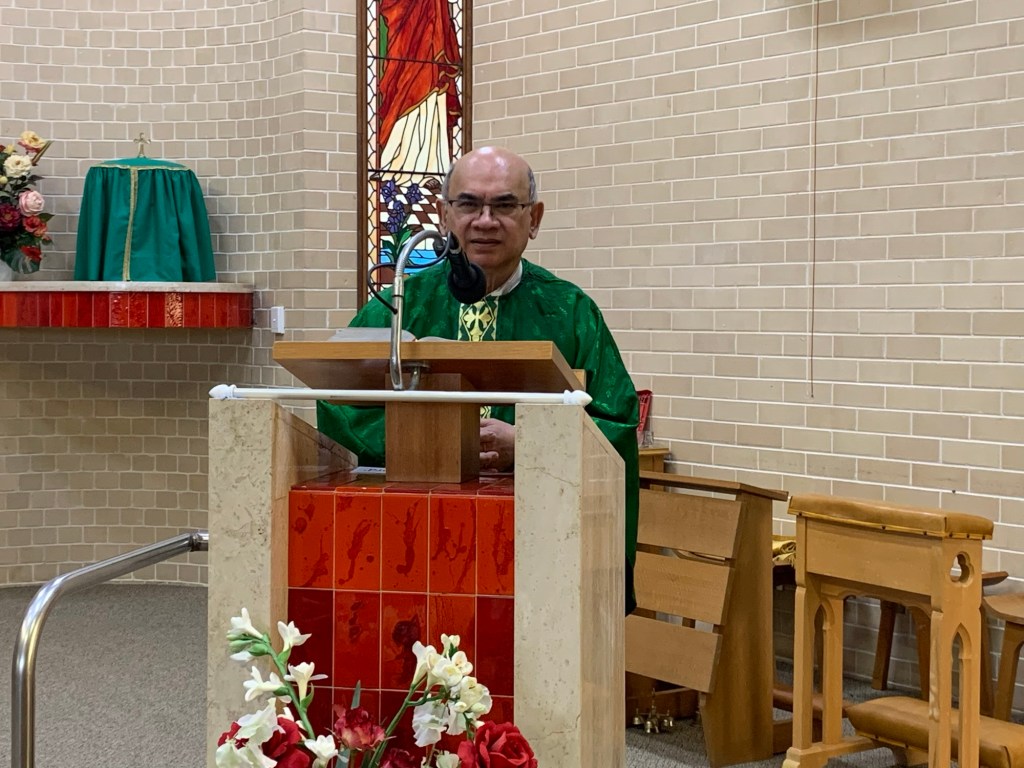
Today’s first reading and the Gospel lesson that Jesus gives us, is about pride and humility. Jesus had encountered all sorts of people who came to him. He could recognise that many of those who rejected his message did so because of pride. Humility, Jesus is saying, is the door that opens us to God’s message of love.

Mission Sunday today reminds us that humility is an important attitude that is central to the call of love. Love founded on a humble heart will seek and listen to God and will listen to the other person. Our humility is reflected in how we see others, how we treat others and how we respond to difficult situations and how we respond to the suffering of others.

Pride takes joy in the failure of others; humility seeks to find the good in others.
Pride think themselves superior to others; humility is grateful for others.
Pride patronizes; humility supports.
Pride seek to be praise and if that does not happen pride praises himself; humility seeks to praise others.
Pride seeks only to criticize, humility seeks to correct and also to affirm.
Pride questions ‘why we do not have’; humility gives thanks for the blessings of God.
Pride ignores the plight of others; humility reaches out to help.
Pride bullies others when things don’t go their way, humility seeks solutions for to benefit all.

A humble heart would further recognise that what we possess are gifts from God. Hence the humble is compassionate and would seek to share but the proud only thinks of himself.

Pride damages relationships whilst humility builds communion.

God blesses the humble but God condemns the proud.

Humility, like love is not something you can learn, but must grow into. We cannot practice to be humble, it is an attitude within that is nurtured each time we reach out to others with love in the heart.

All this is found in this year’s message for World Mission Sunday. The theme, inspired by Pope Francis’ message for World Mission Sunday 2025 and carried forward by Pope Leo XIV is “Missionaries of Hope Among All Peoples.” It highlights hope and unity, emphasizing how we can collectively turn our faith into action……..to become bearers and builders by serving sharing the joys and sufferings of the weak and vulnerable with compassion and tenderness…….in a world often unfortunately defined by materialism.

In his heartfelt address, Pope Leo XIV reflected on his own missionary journey and the transformative power of faith and generosity. He said, “When I served as a missionary priest and bishop in Peru, I saw first-hand how the faith, prayer and generosity shown on World Mission Sunday can transform entire communities.

So on behalf of Pope Leo XIV and Catholic missionaries living and serving amongst the poor and vulnerable peoples of our world, thank you so much for your regular monthly and annual support for the Catholic Mission’s Propagation of the Faith.

The bulletin has information on how you can contribute this year and there are envelopes in the foyer in which you can place your donation and return it next week.

29TH SUNDAY ORDINARY TIME – YEAR C (2025)

EXODUS 17: 8-13
PSALM 120
2 TIMOTHY 3: 14 – 4:2
LUKE 18: 1-8


Have you ever felt at times that is difficult to pray?
Sometimes maybe it is because we are too busy.
Sometimes maybe it is because we have doubts, especially if our prayers do not seem to be answered.
We may feel that God does not listen to our prayers.

Some years ago in Belgium, a number of little children were kidnapped.
Many people were praying for them.
They were later found: dead and were sexually abused.
At the funeral, the priest asked “Why did God not answer our prayers?”

We keep praying for peace for places like in the Ukraine, the Middle East and many parts of Africa, yet peace seems so far away.
We even pray for our family members who have left the church, yet there seem to be no effect.

Does God not respond to our prayers?

Today’s readings speak about prayer
In the first reading, Moses with the help of Aaron and Hur pray for their people.
Moses tires but he perseveres for he realizes that his people depend on his prayers.

In today’s Gospel, Jesus encourages us to persevere in prayer.
He tells a parable about the need to pray continually and never lose heart.
If an evil judge relents at the persistence of a widow, would not God, who is just and merciful.

But Jesus is teaching us something more about prayer.
He asks, “When the Son of Man comes will he find faith on earth?”
Prayer demands faith on our part.
It is only in faith that we can hear God’s response to our prayers.

Faith is about trusting in God’s way and not our way.
Faith is about being humble to accepting God’s way
Faith opens us to listening to God’s love and will speaking to us.

For faith calls for an openness and obedience to God’s way.

The question this poses is ‘How well are we open to listening to God in prayer?”

In the second reading St Paul calls Timothy to be faithful to the Good News.
This is God’s central response to our payers today; be faithful to the Good News for God has come to save us from sin. Repent and believe the Good News.

Unfortunately we as a society have opened ourselves to evil and so invite evil into our lives.
We wonder why the little children in Belgium had to suffer yet do not question the permissive society we have become accepting and encouraging a wide variety of pornography and false values in our world especially through the media..

When we pray for peace in the world or even in our families, we can often pray for a change in the other party and forget that maybe we too need to change.
How well as a world community do we seek to share the world’s good with each other.

It is so hard to have an agreement to tackle climate change.
Would we and the rich nations agree to live a more simple life that others in the poor countries may have a better life?
What influences our votes in election: What is it in for me or the party who promises to increase manifold aid to the poor here and in the world?

What about our prayers for the sick?
We can only understand God’s response in the love that Jesus had at the Garden of Gethsemane.
Our very love acceptance can be an offering for the salvation of souls.

God’s response to our prayers often calls upon us to accept his ways in faith, rather than our own.
‘Prayer does not change God, but it changes the person who prays.

Prayer is the most powerful instrument against all evil.
The power of prayer lies in the love and humility that comes with it.

Exaltation of the Cross

NUMBERS 21: 4-9
PSALM 77: 1-2, 34-38 R. v. 7
PHILIPPIANS 2: 6-11
JOHN 3: 13-17


The feast of the exaltation of the cross goes back a long way. In 326 the Emperor Constantine’ mother, Helena, at the grand age of 80, set sail for Jerusalem to find the cross of Jesus and his tomb. She found the site of the Holy Sepulchre and established a church on the site, which is venerated to this day.

The true cross was more elusive. It was claimed that the Jewish leaders had hidden the cross in a well in Jerusalem. One of the Jewish leaders told the Empress Helena in which well to look for it. The story goes that they dug for days and found three crosses. They weren’t sure which one was the true cross, so the bishop of Jerusalem, St Macarius, sent the crosses off to the bed-side of a dying woman. She touched the first two crosses to no effect, but on touching the third cross she immediately recovered. St Helena had found her true cross.

The cross remained in the Church of the Holy Sepulchre in Jerusalem until the early 7th century. The entire city was then looted by the Persian King, Chosroes II. He took the cross to Persia. In 628, Emperor Heraclius II overthrew the Persian king and brought the cross first to Constantinople, his capital and then in 629 to Jerusalem. Today’s feast commemorate the triumphant return of the holy cross to Jerusalem.

Today, the Church invites us to enter into a deeper meaning of what the holy cross stands for.

The reality of life is that suffering will come to all of us in some way or other. And suffering and death is the consequence of sin. But sin does not have the last word. Today’s feast celebrates Jesus victory over sin. This is what make the holy cross a rich symbol of God’s triumph.

Because Jesus suffered and died on the cross, he is there with us in our suffering. Suffering can sometimes lead us to sin itself. But through Jesus is found the power of God’s love to overcome sinfulness and always be life giving. For the cross is not a sign of death but through Jesus has become a sign of life and love.
The holy cross ultimately points to our destiny to be united with Christ in heaven where there will be no more evil or sin or death.

23rd Sunday in Ordinary Time – Year C (2025)

WISDOM 9: 13-18
PSALM 89: 3-6, 12-14, 17 R. v. 1
PHILEMON 9-10, 12-17
LUKE 14: 25-33


As we celebrate Father’s Day today/tomorrow, our Gospel reading seems to be inappropriate.
However in fact it is quite apt. Today’s reading is a continuation of Jesus’ teaching in Luke’s Gospel about Christian discipleship. Here, Jesus stresses that the essential condition for discipleship is total dedication and commitment to Christ. it is not that Jesus is asking us to hate father, mother, sister, brother or ourselves. In the Hebrew language of his time, there was no phrase for a “loving less”. Maybe even that can seem a bit harsh.

But Jesus is stressing the priority of our relationship with God over others. In the parables that follows, Jesus stresses that unless we can truly make a commitment of our faith in God, we risk being drawn away from God by other attractions. God must come first before all else for only God gives true life.

There is wisdom in today’s Gospel about the truth and beauty of Christian discipleship. It is when we place God first in our lives, that everyone, our family and everything else, which is also important to us, take a whole new meaning. Instead of allowing the pursuit of our career, social life, family and material goods distract us from our relationship from God, Jesus is inviting us to make God the centre of all these aspects of our lives.

When God becomes the centre of our family for instance, then the family becomes the source of our experience of God’s love, filled with God’s grace. When we bring God into our work, our attitude towards work takes on a Christian dimension. Work does not become a drudge but an occasion to be a witness to God in our joy and thanksgiving. Even as a priest, I must remind myself that it is God’s work I do, and when I offer my ministry to God in prayer, I am amazed what God does even through my own weakness.

As we celebrate Father’s Day today, today’s message about Christian discipleship is also applicable to the role of fathers. As in a family, when the father places their family above all else, their work, their hobbies and their desires, it is their family that is transformed by the father’s commitment to them. And when the father places God first above all else, their fatherhood is also transformed, their family life takes on a new and deeper meaning.

Make your fatherhood as an offering to God. Offering yourself to God is like Jesus offering his life for us, trusting in his Father in following His way.

You can become the best father by becoming the best Christian that you can be.

22nd Sunday in Ordinary Time – Year C (2025)

ECCLESIASTICUS 3: 17-20, 28-29
PSALM 67: 4-7, 10-11
HEBREWS 12: 18-19, 22-24
LUKE 14: 1, 7-14


In today’s Gospel, Jesus teaches about humility and hospitality. One way to understand humility is to contrast humility with its opposing sinful attitude: that of pride to highlight the significance of humility. St Augustine said that Humility is the core of all other Christian virtues. Pride on the other hand leads to many a sin.

When we look at the whole of Salvation History, in the Book of Wisdom, we are told that the reason for the fall of the Devil was envy of the human race. (Wisdom 2:24). It was pride that led to envy that led to hatred.

Contrast this with St Paul’s hymn in the letter to the Philippians about Jesus in 2:6-11:

Make your own mind about Christ Jesus. Who, being in the form of God, did not count equality with God something to be grasped. But he emptied himself, taking the form of a slave, becoming as human being are. And being in every way like a human being, he was HUMBLER yet, even to accepting death, death on a cross. And for this God raised him high, and gave him the name which is above all other names. So that all beings in the heavens, on earth and in the underworld, should bend the knee at the name of Jesus
and that every tongue should acknowledge Jesus Christ as Lord, to the glory of God the Father.

What is humility? Humility is not about beating ourselves and saying we are not good or good enough. It is not about denying the truth but is rooted in the truth of reality. If we are good at something, humility recognizes God’s blessing and give thanks to God. Humility is also a deep awareness of our limitations and shortcomings in the presence of the divine perfection, and of our sinfulness in the presence of the all-holy God.

Humility is important to our Spiritual Growth. There are many thing we do as Christian, prayer, helping the poor, serving in the parish, attending Mass. Yet without humility, these have no spiritual value for it is not One with the Spirit of God.

How humble are we? The first degree of humility is the reverence for God, who we should constantly have before our eyes.

The depth of our humility can also be seen in how we see others, how we treat others and how we respond to difficult situations. How well do we listen to others or do we always want it to be our way. Humility is always revealed in whom we choose to mix with, especially those who have little to give us back in return.

Pride takes joy in the failure of others. Humility seeks to find the good in others. Prides seeks to put others down, humility seeks to affirm others. Pride leads us to get angry with the weakness of others. Humility seeks to assist them. Pride is competitive and always comparing oneself with others, finding pleasure in being. better. Humility seeks always to support and encourage.

Humility is always ready to apologize for our failings and to forgive others of their failings. When things go wrong, pride is ready to blame others. Humility seeks a solution.

Sometimes when we refuse a request to do something because we feel we are not good enough, it may be pride not humility that controls us. The pride in us may desire to protect us for we fear looking bad, so we turn down request to get involved. Humility overcomes all fear and anxiety.

As we heard the very story of Jesus, humility is in the centre of salvation history for it is the essence of God who humbled himself to come amongst us and to die a cruel and degrading death because of love for us.

St Vincent de Paul said, “The most powerful weapon to conquer the devil is humility. For as he does not know how to employ it, so neither does he know how to defend himself from it.”

21st Sunday in Ordinary Time – Year C (2025)

ISAIAH 66: 18-21
PSALM 116 R. Mk 16:15
HEBREWS 12: 5-7, 11-13
LUKE 13: 22-30


God has blessed us in so many ways with his gifts, the greatest of which is to live in love for God has created us all in His own image. And God has given us the gift of free will to choose, for it is in our free will to choose that we can come to know what love is.

But our love today is not perfect. God’s perfect love is offered to us through Christ’s death and resurrection. It is in heaven where that love becomes perfect.

Our pilgrim journey on earth is about making choices today for God’s love. A life that chooses for God’s love today will reach for that perfect love in the end. We will become what we choose today.

The first step is to recognise our need of God’s mercy and love, for we cannot in ourselves attain the perfect love and eternal life but depend on God. It is about being humble before God. Hence, the sacraments are God’s gifts today to help us choose for God. Choosing for God’s love today is longing for God and so making time for God in prayer. But choosing for God’s love is more than just words.

Jesus in speaking about God’s judgement said that those who fed the hungry and thirsty, who clothed the naked, who visited the sick and those in prison are the ones who have lived in God’s love.

It is about always seeking to care for those in need.
It is about treating others with respect and love.
It is about living in God’s love.

And so today as we place the plaque professing that we believe and respect all life, let us speak out for all who have no voice, the unborn, the terminally ill, the elderly, the foreigner, refugees, the asylum seeker, the poor, the lonely, the hungry and the oppressed. They are all God’s gifts to us to help us to teach us how to love.

Our Gospel reading is all about being ready to enter Heaven. Heaven is all about living and being in God’s love. If we spend a lifetime rejecting this love, why would we want that love when we die. We wouldn’t even recognize it or what it meant. It is not God’s who shut us out of heaven but we shut shuts heaven from our hearts